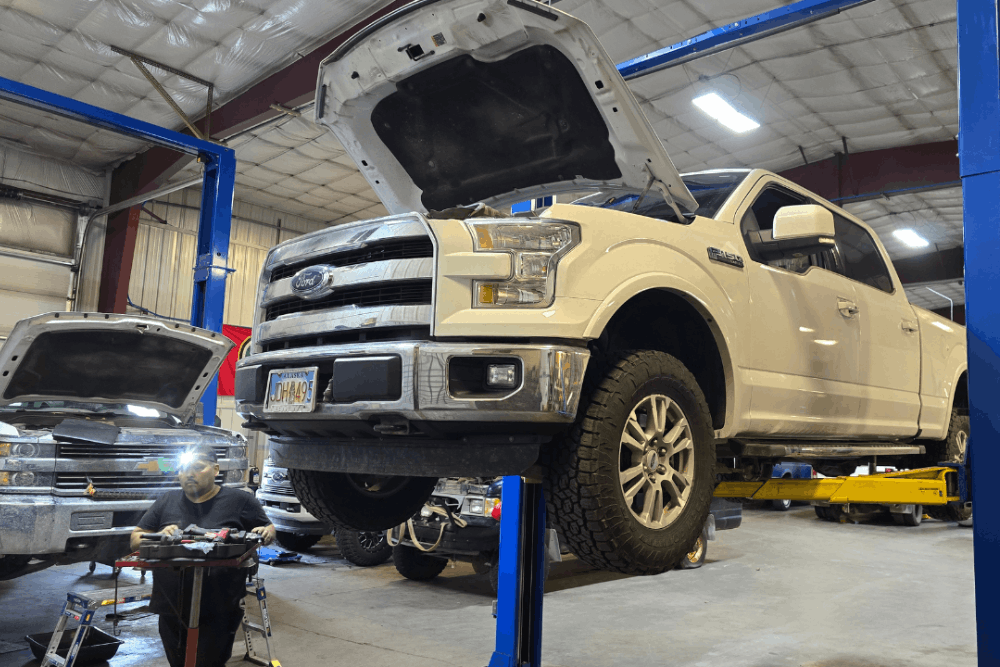
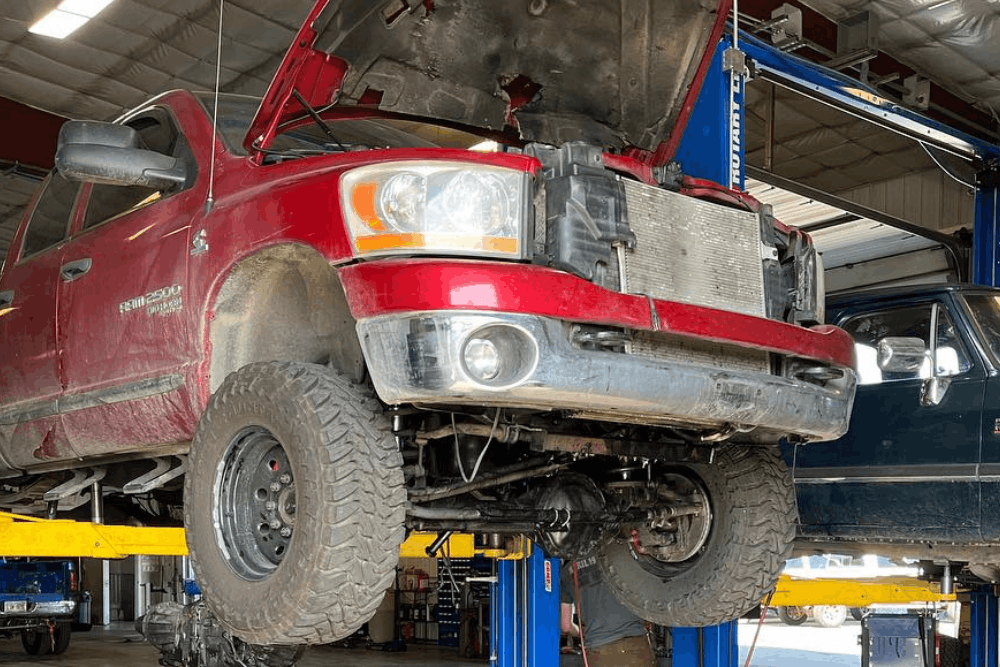
If you drive a Dodge or Ram with a Cummins under the hood here in the Mat-Su Valley, you already know the roads don’t do your front end any favors. Frost heaves, gravel washboard, and summer trail runs put constant stress on ball joints, axle seals, and steering components, and eventually something gives.
The team at 1023 Diesel & Fleet in Palmer, AK, sees this pattern every season, and this guide walks you through the warning signs, the causes, and what front axle replacement and suspension repair actually involve so you know what to expect before you bring your truck in.
Why Alaska's Roads Are Brutal on Cummins Front Ends
The Mat-Su Valley is beautiful, but it’s not kind to a heavy-duty truck’s front suspension. Between frost-heaved pavement, potholed side streets, and gravel roads leading out to cabins and trailheads, your Cummins-powered Ram is absorbing a lot of impact every single day.
That constant jarring works against the front axle assembly in a few specific ways:
- Repeated impact loading accelerates wear on ball joints and steering linkage.
- Vibration from washboard gravel loosens fasteners and speeds up seal degradation.
- Cold winter startups stiffen grease and rubber components, making them more prone to cracking.
- Summer off-roading and towing add extra stress right when components are already worn from winter.
None of this means your truck is doomed, but it does mean front-end components on a Ram 2500 or 3500 with a Cummins wear out faster here than they would on smooth city streets. Knowing what to watch for helps you catch problems before they turn into a breakdown on a gravel road miles from town.
Cummins Truck Ball Joint Issues and the Dreaded Death Wobble
Ball joints are the pivot points that let your front wheels turn while supporting the weight of the truck. On solid-axle Cummins trucks, these joints take a beating, and when they wear out, the results are hard to ignore.
Common Signs of Bad Ball Joints
- Steering wander, where the truck drifts or wanders on straight roads
- A shaking or shimmying sensation at highway speed, often called “death wobble”
- Clunking or popping noises over bumps
- Uneven tire wear on the front axle
- Looseness in the steering wheel
Death wobble is a well-known issue on solid front axle Ram trucks, and worn ball joints are one of the most common triggers. When a ball joint develops play, it allows the axle to oscillate side to side, and that vibration can feel violent at speed, especially on rough pavement or gravel.
Why Ball Joints Fail Faster on Diesel Trucks
Cummins trucks are heavy, and many owners tow or haul near the truck’s rated capacity. That extra weight, combined with Alaska’s rough roads, puts more stress on ball joints than a typical light-duty truck ever sees. Regular inspection of these heavy-duty truck steering components is one of the best ways to catch wear before it turns into a wobble you can feel behind the wheel.
Leaking Inner Axle Seals: What They Do and Why They Fail
The inner axle seal sits where the axle shaft passes through the differential housing. Its job is simple but critical: keep gear oil inside the axle housing and keep dirt, water, and debris out.
When that seal fails, gear oil leaks out, and on a 4×4 Cummins truck, that oil can end up contaminating the front differential or even reaching the brakes if the leak is bad enough.
Signs of a Leaking Inner Axle Seal
- Oily residue on the inside of a front wheel or tire
- A puddle of gear oil under the front axle after parking
- Low fluid level in the front differential
- Grinding or whining noise from the front axle area
Diagnosing the Need for Front Axle Replacement and Suspension Repair
Not every clunk or wobble means you need a full front axle replacement, but it’s worth having a diesel-savvy technician take a real look rather than guessing. A proper inspection typically includes:
- Physical inspection of ball joints for play, looseness, or torn boots
- Visual check for axle seal leaks at the differential and axle tube
- Steering linkage inspection for worn tie rods, drag links, or steering dampers
- Front-end alignment check to see how uneven wear or a recent repair has affected geometry
If you’ve searched “wheel alignment near me” after noticing your truck pulls to one side, or the steering wheel sits off-center, that’s often a sign the front end has already shifted out of spec, sometimes from worn components, sometimes from hitting something on a gravel road. Alignment should always follow any ball joint, tie rod, or front axle replacement work, since new parts change the suspension geometry slightly and need to be reset.
If you’re noticing any combination of wander, clunking, or a leak under the truck, it’s worth getting it looked at before a trip out on the trails or a long highway haul. Stop by 1023 Diesel & Fleet at 530 E Steel Loop, Palmer, AK 99645 to have your front end inspected before small wear turns into a bigger repair.
Preventive Maintenance That Protects Your Front End
Diesel truck suspension repair is a lot less painful when you catch problems early. A few habits go a long way toward protecting your investment:
- Grease ball joints on a regular schedule if your truck has greaseable fittings
- Check differential fluid levels periodically, especially after noticing any residue near the wheels
- Have the front end inspected after hard off-road use or a hard hit on a pothole
- Get an alignment check whenever you install new tires or notice uneven wear
- Address small clunks or noises right away instead of waiting for them to worsen
Staying ahead of wear on ball joints, axle seals, and steering components keeps your Cummins running straight and confident, whether you’re hauling a trailer through the valley or heading out on a gravel road to camp.
Why 1023 Diesel & Fleet Is Palmer's Cummins Front End Specialist
We built 1023 Diesel & Fleet around one idea: diesel trucks deserve technicians who actually understand what they’re up against out here. Alaska’s roads are hard on heavy-duty trucks, and we know exactly what that does to a Cummins front end because we see it every day.
- Diesel-Focused Expertise: We work on diesel trucks specifically, so we know the common failure points on Cummins-powered Ram trucks inside and out.
- Local Road Knowledge: We understand how Palmer and Mat-Su Valley roads accelerate wear on ball joints, axle seals, and steering components, and we inspect accordingly.
- Straight Answers, No Guesswork: We tell you what’s actually wrong with your truck and what it needs, not just a list of parts to sell.
We’re glad to take a look at your front end and help you figure out the smartest way forward.
FAQs About Front Axle Replacement and Suspension Repair
Why does my Cummins truck wander all over the road?
Steering wander on a Cummins truck is usually caused by worn ball joints, loose steering linkage, or a front end that’s out of alignment. We check all three at 1023 Diesel & Fleet to pinpoint exactly what’s causing the movement.
How do you test for bad ball joints on a heavy-duty truck?
We physically check for play in the joint while the front end is unloaded and inspect the boots for tears or grease loss. If a joint moves more than it should, or the boot is compromised, we flag it for replacement.
Can I drive safely with a leaking front axle seal?
Driving with a leaking axle seal isn’t a good idea for long, since low gear oil accelerates damage to the differential gears. We recommend getting it looked at quickly to avoid turning a seal repair into a bigger differential job.
How much does it cost to replace diesel truck ball joints?
Cost depends on your specific truck and how much related wear is found during inspection. Contact 1023 Diesel & Fleet directly for an accurate quote based on your Cummins truck’s condition.
Schedule Your Front Axle Replacement and Suspension Repair in Palmer, AK Today
If your Cummins truck is wandering, clunking, or leaking gear oil from the front axle, don’t wait for it to get worse out on a gravel road. Contact 1023 Diesel & Fleet at 530 E Steel Loop, Palmer, AK 99645 to schedule an inspection and get a straight answer on what your front end needs.